


CRATE DIGGING
THERE IS A DISTINCT PLEASURE in discovering old music…music that’s not only made its dent in the universe prior to your lifetime but that’s influenced many of the bands that you love while managing to sound modern in the present day and age. English post-punk band Gang of Four’s debut album Entertainment! pulls off that feat in rather convincing fashion, often regarded as one of the most influential debut albums of all time. Really. And if the effusiveness sounds like that of a someone who has just stumbled upon them, that’s because it is. For anyone here familiar with Gang of Four’s 1979 debut album, you owe me one for not turning me on to it. For everyone else, you’re welcome.
If you’re new here, think of Dying Breed as a bi-monthly letter from your New Yorker cousin a little too into fashion, music, film, art, and books. The general idea being to turn you on to the patchwork of influences and references that inform the menswear label I design.
Crate Digging is about discovering old music. The classics. The obscure. The looked over. The uncut gem. The minor masterworks. It’s a liberal arts audit of the music that scores the world of F.E. Castleberry. Alternative. Classical. Rock. Pop. Afrobeat. Grunge. Blues. Punk. Post Punk.
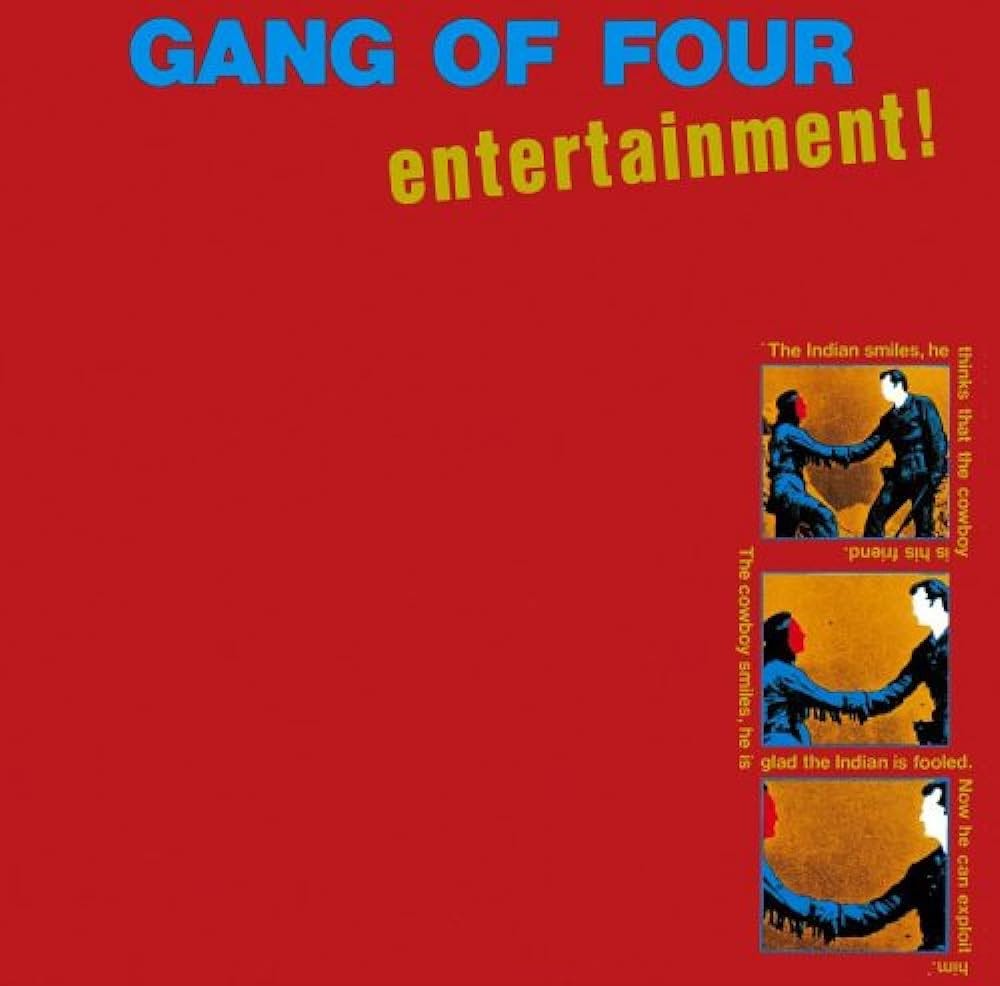
If I would have discovered Gang of Four’s Entertainment! 30 years ago (at age 13), my high school punk band would have been a much better punk band. A much more socially and lyrically nuanced punk band. Instead, we wrote “original” songs and people would ask us what Blink-182 song we just covered. Entertainment! kick started the post-punk sound of the late 1970s with its sharp and angular guitar riffs, driving baselines, and politically charged lyrics—lyrics laced with left-wing ideology critical of capitalism, war, and the their alienating effects on society.
“Why can’t we make radical music that talks about alienation and oppression and things like that, but also is really thrilling?”
—Jon King, Gang of Four singer and lyricist
The album art alone was a damning socio-political critique of mid-20th century advanced capitalism. A critique that today, while certainly still applicable, seems to be one we’re all too apathetic to continue hurling. The corporations have won. A diatribe for another time.

Entertainment! is a landmark release within the post-punk genre. Kurt Cobain regarded the album as one of his favorite 20 albums (having disclosed that Nirvana essentially began as “a Gang of Four and Scratch Acid ripoff”). It’s a minor influence to a handful of modern bands I love like Spoon, Radiohead, and Arcade Fire. All hits. No skips. “Damaged Goods” (a Marxist critique of the transactional nature of everyday life, including romance and sexuality, illustrated through a breakup), “Natural’s Not In It”, and “At Home He’s a Tourist” serve as particular highlights. Have fun dancing to this one.
FILM FORUM
I RECENTLY WATCHED A DOCUMENTARY, well a semi-documentary, called The Cry of Jazz. I delineate semi-documentary because it explores—by way of a [scripted] heated conversation between a group of Black and white jazz aficionados—the relationship between jazz and race in America. Made in 1959 and directed by Edward Bland, at arguably the height of jazz, the short proved explosively controversial both for its frank discussion of race and its bold proclamation that “jazz is dead.”
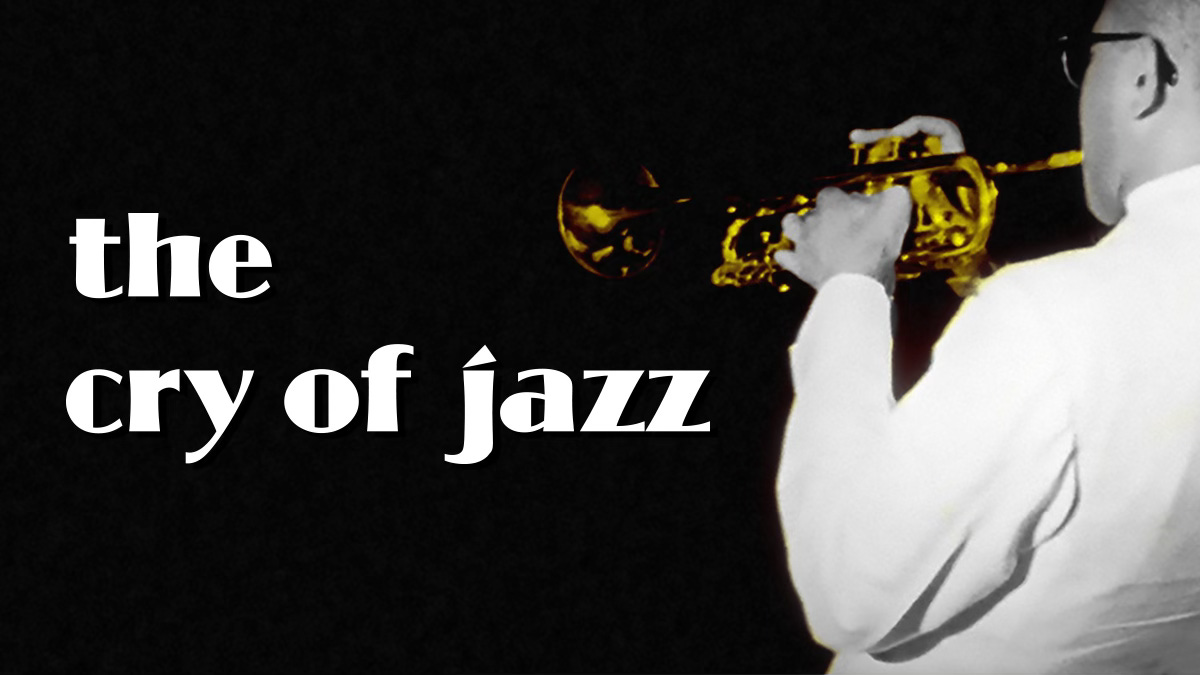
For anyone who loves jazz and for anyone who doesn’t for lack of understanding it, The Cry of Jazz provides a concise primer on the plight of the Black American and the consequential birth of the art form. While I have loved jazz for the better part of the last ten years, The Cry of Jazz deepened my understanding of why the black man created jazz and why he is the only one with the necessary musical and human history who could have created jazz. More importantly, I found the film enlightened and heightened my empathy around the suffering and struggle of our fellow man.
“Jazz is merely a thin glimpse of something with colossal power which is arising.”
The proclamation that “jazz is dead” is simply a claim that the music, as an art form, no longer truly served the black man. Jazz is dead, but the spirit of jazz would reincarnate in the form of hip-hop some 25 years later…furthering a future filled with hope where America begrudgingly would allow one.
It’s a relatively short watch at just over half an hour. The Cry of Jazz can be currently streamed on The Criterion Channel’s streaming service (it’s $10.99/month and they have over 3,000 titles in the library—a cinephile’s dream).
BOOK CLUB
MANY OF YOU UNDOUBTEDLY, like me, were haphazardly tuning into the 133rd French Open over the last two weeks. It is perhaps my favorite tennis grand slam. The iron oxide clay. The Perrier green. And if you haven’t watched the William Klein documentary The French which I mentioned a few weeks ago, you’ll be treated to an incredibly intimate behind-the-scenes look of Roland Garros that few had entrée to up until 1981 or have seen since 1981.
The summer grand slams (i.e. Roland Garros and Wimbledon) usually lure me back to a David Foster Wallace essay: “Federer Both Flesh and Not”. Wallace wrote about tennis because life gave it to him—he had played well at the junior level—albeit in an unimaginative fashion. “I couldn’t begin to tell you how many tournament matches I won between the ages of twelve and fifteen against bigger, faster, more coordinated and better-coached opponents,” Wallace wrote, “simply by hitting balls unimaginatively back down the middle of the court.” Regardless, Wallace wrote about the game as someone who not only played it but as someone who understood it, loved it, and had his heart broken by it.
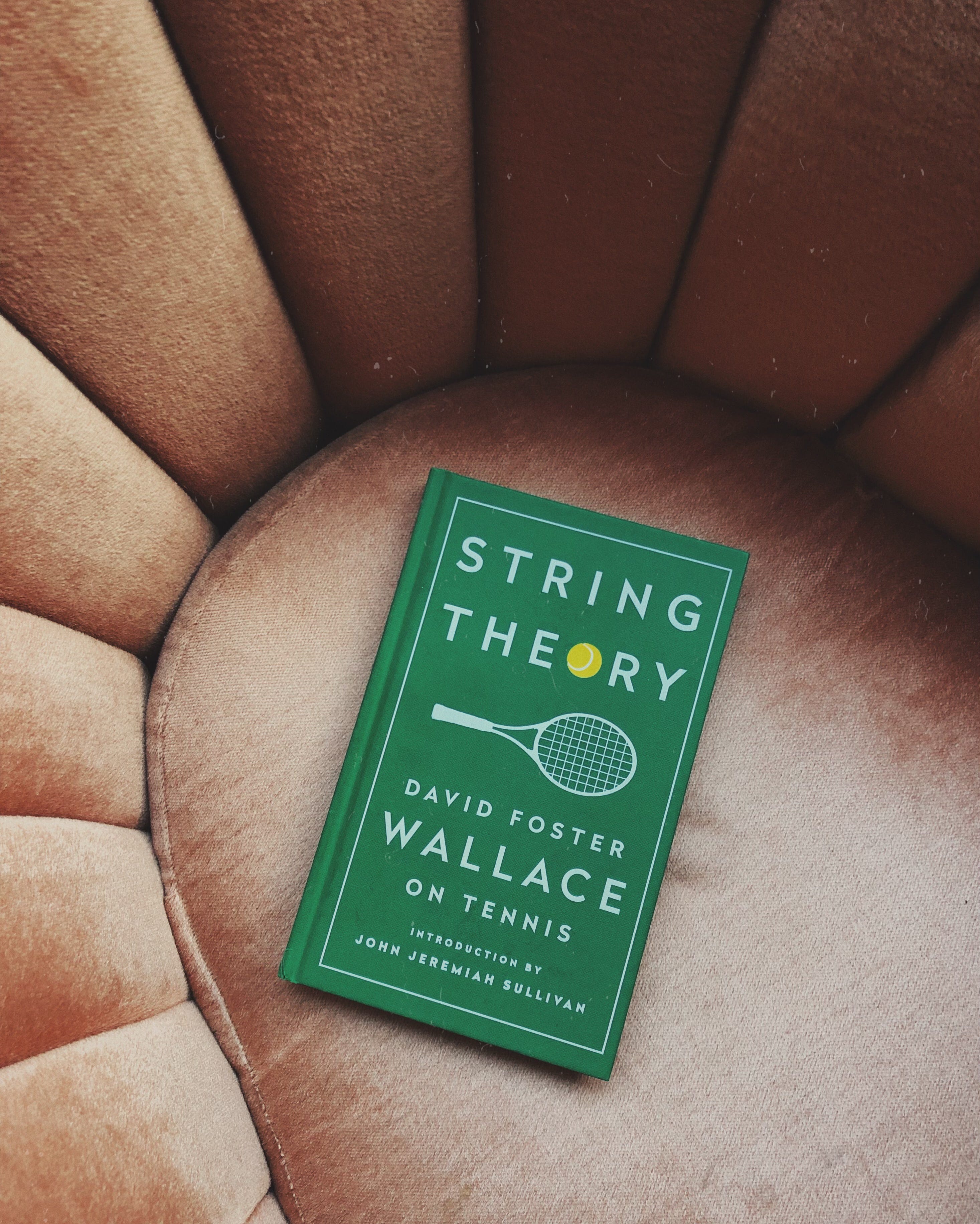
“Federer Both Flesh and Not” first appeared, as “Federer as Religious Experience,” in The New York Times’ ill-fated sports-themed PLAY Magazine, August 20, 2006. It is perhaps the most intelligent and beautiful piece of writing ever written about the sport of tennis or its luminaries. The essay is gathered, along with four other Wallace's tennis-themed nonfiction originally written for various publications, under one cover in the book String Theory. The following is a particularly poignant excerpt by Wallace on Federer’s game, or more aptly, his genius.
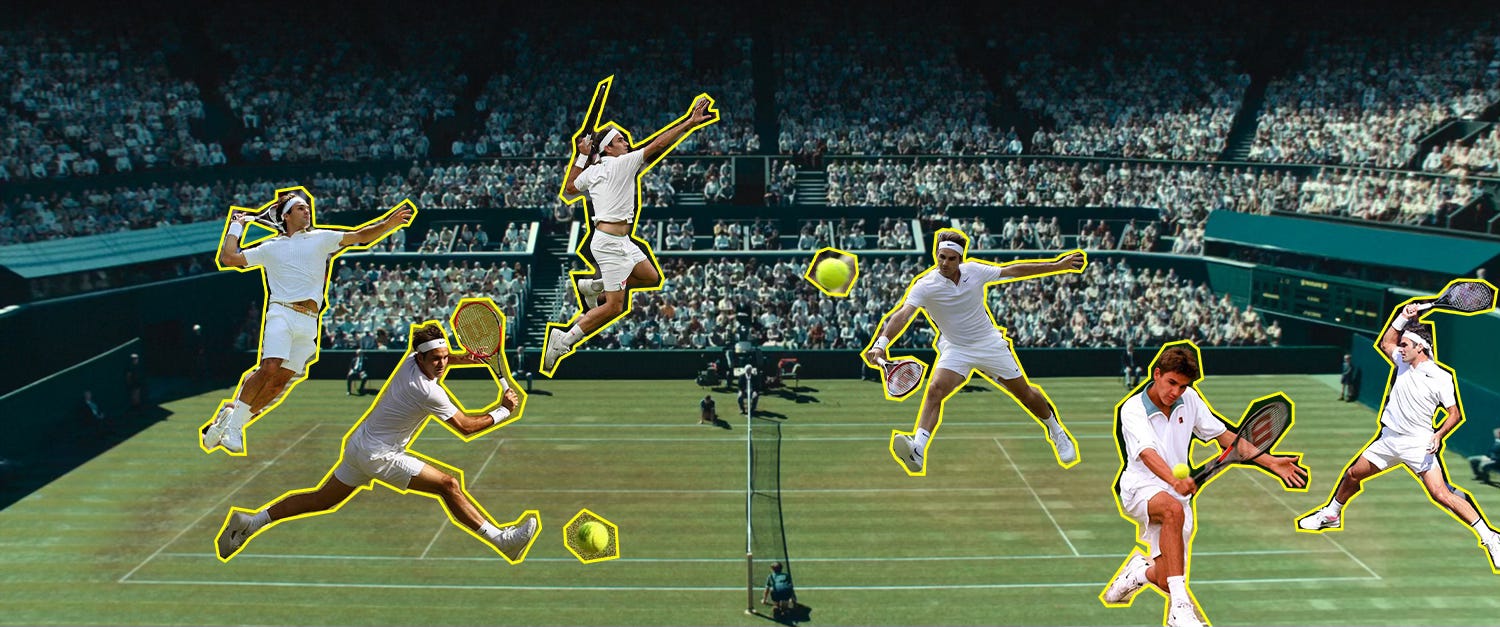
There are three kinds of valid explanation for Federer’s ascendancy. One kind involves mystery and metaphysics and is, I think, closest to the real truth. The others are more technical and make for better journalism.”
The metaphysical explanation is that Roger Federer is one of those rare, preternatural athletes who appear to be exempt, at least in part, from certain physical laws. Good analogs here include Michael Jordan, who could not only jump inhumanly high but actually hang there for a beat or two longer than gravity allows, and Muhammad Ali, who really could “float” across the canvas and land tow or three jabs in the clock-time required for one. There are probably a half-dozen other examples since 1960. And Roger Federer is of this type—a type that one could call genius…and genius is not replicable.
Glad I found your substack! Dove into Gang of Four, I liked “Return the Gift”. The vocal production and backbeat gave me talking heads vibes. Then I realized it came out after their 77 album. Then I noticed that album has been remastered in dolby atmos on apple music and it sounds sick. Big fan of dolby atmos when it’s done right.
I can see the punk in your work . A lot of life lessons were learnt @the old club in ATL ; the 513 off of the then not so fashionable Edgewood Ave .
I believe that the parking lot is still in tact 😎 under the shadow of some modern living space .
As the punks age , the better they dress , what can we say ? We had the best music & style 😉 .
Gang of Four is indeed a fantastic band .
Always looking forward to a break in the day when A Dying Breed is published !