


CRATE DIGGING
IT WOULD BE FITTING IF the most influential rock band of all time pioneered the stage dive. Reckless. Brash. An assault on an unsuspecting audience. James Newell Osterberg is oft credited as the father of the stage dive. When he dove, he dove as Iggy Stooge. Iggy Stooge of The Stooges. That was 1970.
The older I get, the greater my appetite for older music becomes (I find most current music to be tragic, a get-off-my-lawn rant for another time). While the term “older” is relative, for our purposes here, it’s a barometer for music that predates what we grew up with. Having been raised in a conservative Christian household all but ensured pop culture would not touch me until my sixth grade year in 1992. Everything older than Nirvana’s significant sophomore effort Nevermind is music I came into much later in life.
Crate Digging is about discovering old music. The classics. The obscure. The looked over. The uncut gem. The minor masterworks. It’s a liberal arts audit of the music that scores the world of F.E. Castleberry. Alternative. Classical. Rock. Pop. Afrobeat. Grunge. Blues. Jazz. Punk. Post Punk.
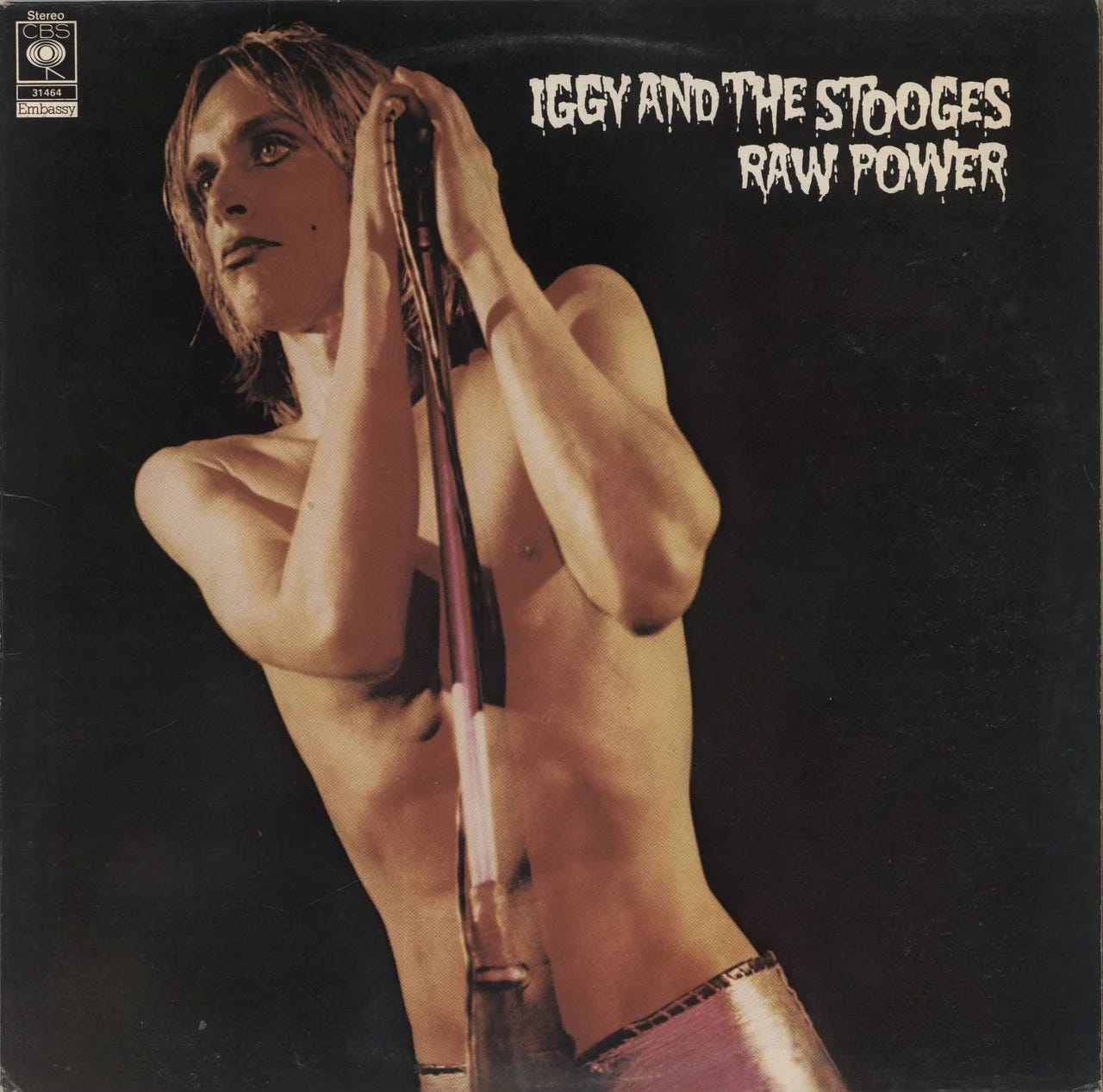
On a recent Monday evening, I sat down to Jim Jarmusch’s documentary Gimme Danger (stream it on Amazon Prime)…a in-depth oral history of The Stooges. I was gleefully reminded of not only how much I love their sound but that of their sonic descendants.
The Sex Pistols.
Bowie.
Blondie.
The Clash.
The Smiths.
The Ramones.
Guns N’ Roses.
Nirvana.
The White Stripes.
The Strokes.
All highly influenced by The Stooges. And those are just the bands you’d recognize. The magnitude of semi-oblivious albums that surfaced in the wake of The Stooges numbered in the thousands.
“My legacy? I’m not sure but I think I helped wipe out the 60s.”
–Iggy Pop
They were the epitome of anti-establishment…often starting gigs late, tuning up their instruments for ten to fifteen minutes before ever playing the first number if they started the gig at all (the kids did not mind). The Stooges simply did not give a shit about showbiz. Iggy felt that rock music had been co-opted by business interests—tamed, streamlined, and market-tested to the point that no new ground could be gained with it (granted Iggy was a full blown addict at this time but that’s punk rock!). The Stooges possessed an honesty about them.
By 1973 The Stooges (now Iggy Pop and The Stooges), having already recorded three groundbreaking albums, were quite literally falling apart. Critics called their music bizarre, insane, tasteless, physically abusive, decadent, sub-literate, amateurish, UNIMAGINABLE, and childish. And those were the positive reviews. Now, over five decades later, The Stooges are one of the most influential bands in the history of rock and roll.
Start with the David Bowie produced Raw Power (1973), it’s their third and best of their landmark albums. It’s a record you turn up to 11 in your car while speeding, screaming at the top of your lungs, on your way to a night out. “Search and Destroy,” an anthem that launched a thousand bands, punches you in the face from the first distorted note and never relents. I’m not sure what’s more unbelievable, that Iggy Pop is still alive at 76 after the parade of drugs he ingested or that The Stooges’ proto-punk sound from over half a century ago still sounds…current.
ART DEPARTMENT

I CAN’T REALLY PINPOINT WHEN I FIRST came across Michael McGregor’s drawings but it was most certainly on Instagram. Each illustration he posted seemed to strike a chord with me—a memory I carried, a meal I’d shared with friends, or a hotel I loved. McGregor is an L.A. based illustrator who has made a name for himself sketching postcard snapshots on hotel stationery. Room Service is a monograph of 118 ‘point & shoot drawings’ made between 2016 and 2023 in hotel rooms, bars, cafes, airports; in restaurants while McGregor was waiting for a friend; in beds and bathrooms, on balconies, aboard trains, planes, ferries, and on buses. The gestural drawings explore luxury, leisure, and travel. The book itself fittingly resembles that of a hotel guest book.
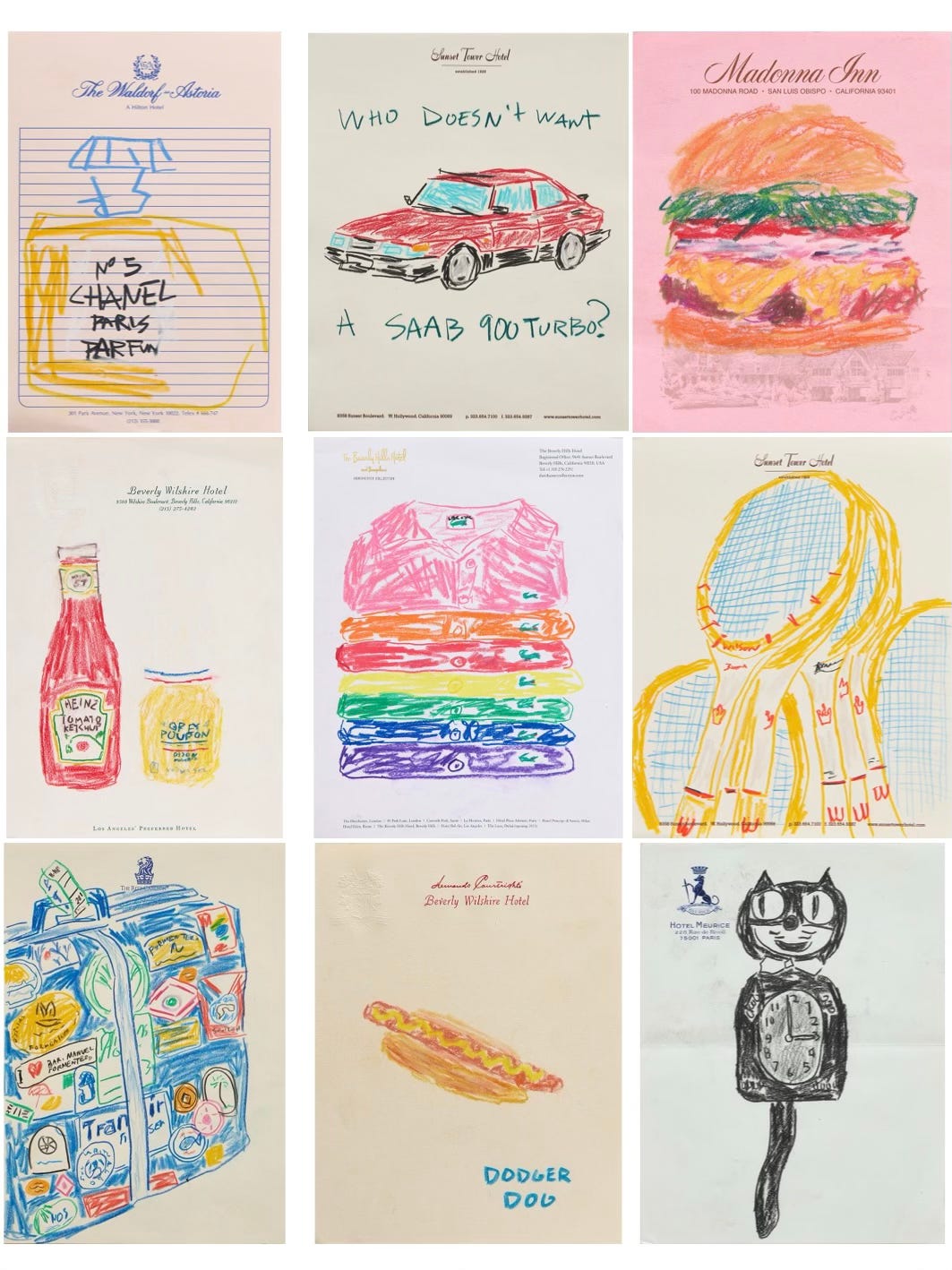
In the pink water closet of my shop hangs McGregor’s Like a Sunday in T.J., It's Cheap But It's Not Free, a limited print of what feels like the morning after a hotel room party amongst friends. A yellow Sony Sports boombox. A McDonald’s fry box. A Gucci loafer. His work tends to celebrate the high life in the objet of leisurely living…ordinary everyday objects such as flowers, shoes, food, lighters, drinks, bottles, plane tickets depicted in a hand that somehow reanimates them. This high/low in McGregor’s work is not only evident in the subject matter but the medium itself—swanky hotel letterhead drawn on in a simple and naive way.

“This is not ‘still life’—understood as art depicting inanimate subject matter—it is art that puts life into what we used to consider still.”
—Nikolaj Schultz
Personal favorites include a Bjorn Borg Fila polo on Tokyo Inter-Continental hotel letterhead, Chanel No. 5 perfume on The Warldorf-Astoria stationery, a Barcelona chair on Chateau Marmont letterhead, a bottle of Heinz ketchup and Grey Poupon on Beverly Wilshire Hotel letter paper. McGregor’s work, like much of my favorite art, has a childlike quality to it, a bit of ecstasy…taking us out of the awfully boring adult state, even if just for a little while.

P.s. Room Service can be purchased on Amazon and you didn’t get the idea to rip and frame your favorites sketches from me.
DRESS CODE
WE NOW LIVE IN A DAY AND AGE when the majority of men wear a neck tie on only two occasions: when they wed and when they’re dead. The 2020 pandemic was the most recent death knell for the tie since casual Friday two decades earlier. I’d relegated my neckwear collection at home to sartorial wall decor. When I was designing my inaugural ready-to-wear collection for the new F.E. Castleberry shop last year, I passed on designing ties. What was the point? Ties don’t really sell and there were more interesting ways to decorate the walls.
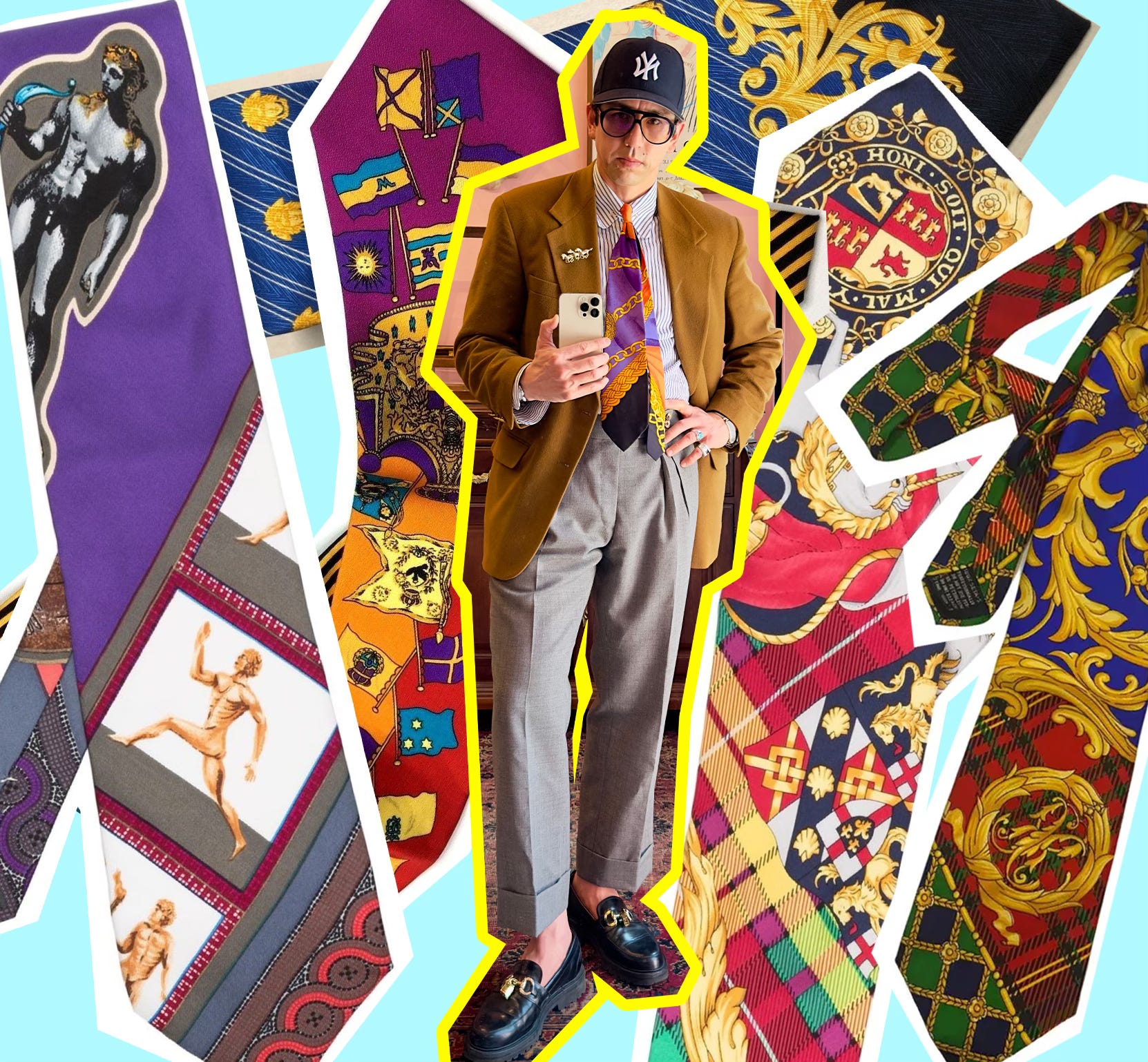
Keep the shirt white or light blue. The jacket navy, gray, or brown…with minimal pattern (although texture is encouraged).
There was little excitement left around it for me. Perhaps it was boredom. Lately, it’s been tailored clothing sans tie that’s largely occupied my imagination. The alchemy of sportswear, streetwear, atheleisure, and western wear with formalwear (essentially a synonym now for tailored clothing) has become a working thesis of sorts defending tailoring’s place in a wardrobe that no longer requires it for the office. Or for date night. Or for any occasion save weddings with a cocktail dress code. In my business of made-to-measure tailoring, the suit (sadly) is often regarded as occasion wear.
Earlier this year, I attended the preview of Elton John’s former Atlanta estate sale at Christie’s. John’s collection of graphic Versace silk print shirts were all on display and felt really cool. WILD, but cool. While I couldn’t see them on me, it got me thinking about the tie again...90s vintage graphic designer ties—the silk baroque print ones with Medusa heads, bold colors, and exaggerated equestrian motifs, specifically Versace. I curated a collection of vintage Hermès, Gucci, and Versace neckties to retail in the New York shop. Keep the shirt white or light blue. The jacket navy, gray, or brown…with minimal pattern (although texture is encouraged).
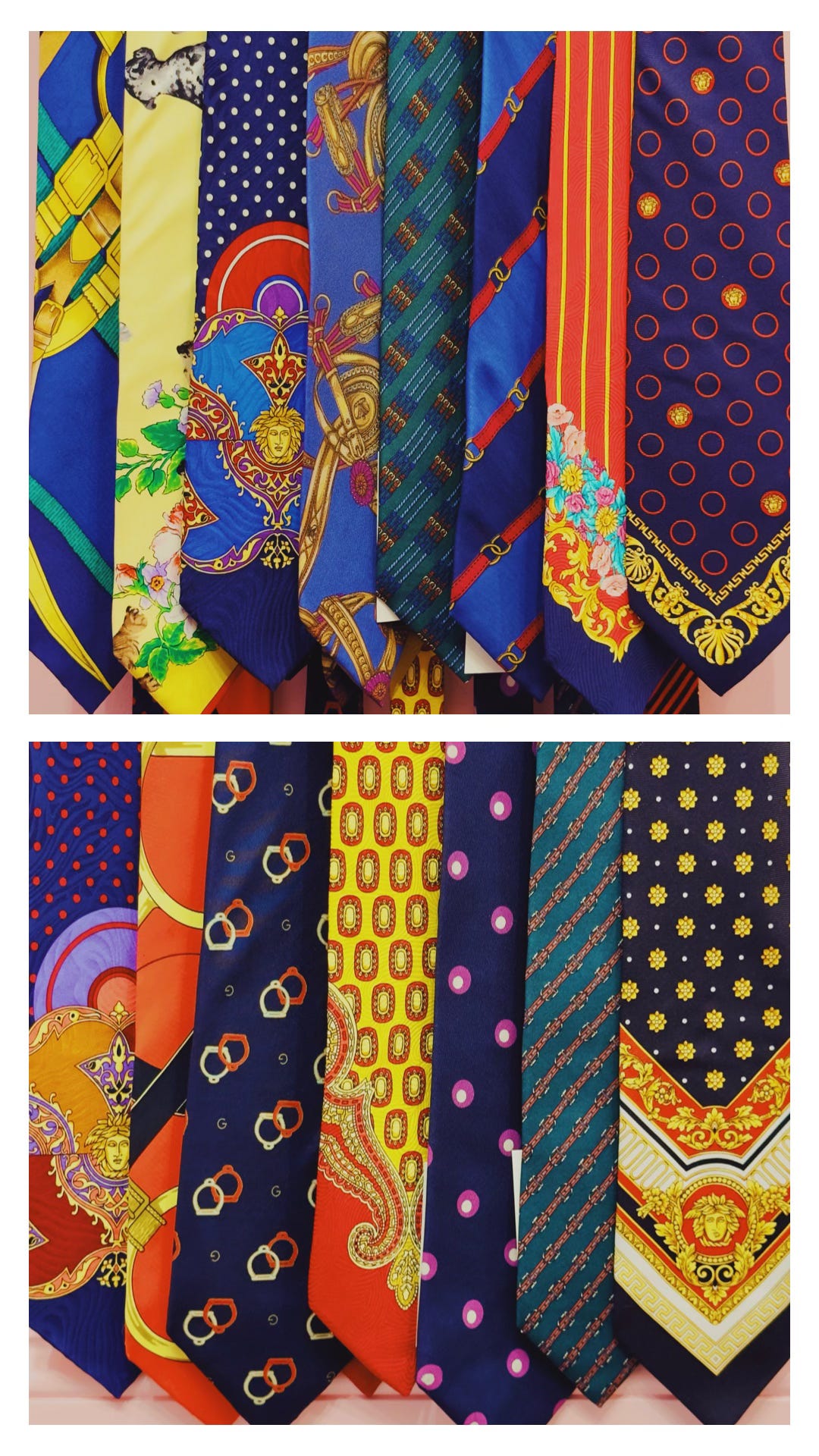
The tie is essentially a fashion piece now. If you’re going to wear one, look like you wore it on purpose. Wear it like you mean it.