


Manhattan, New York
Thursday July 31, 2025
2:17pm The National Weather Service issues a flood watch for New York City. I clock the notification on my iPhone. I look up at the sky. I look back down at my phone. An iCal notification for the 3:30pm screening of The Royal Tenenbaums sits atop a red and blue Cubist mixed media David Hockney self-portrait reduced to a wallpaper on my uncased iPhone. I look back up at the sky. It’s ominous.
2:23pm It’s Thursday and I’m playing hooky. I mean, at this point, the flash flood warning is a convenient excuse from the film gods to catch Wes Anderson’s 2001 The Royal Tenenbaums on the silver screen…again. The last time I saw my favorite film in theaters was eight years ago in 2017.
2:47pm I lock up the shop and head one block south to catch the uptown 1 train at Franklin Street station.
3:13pm Surfacing at Lincoln enter some 65 blocks later, I whip into a bodega for some sour gummy worms the concession stand is all but guaranteed not to stock (a custom I’ve maintained since my adolescence).
3:29pm The rain begins to descend upon Manhattan with a vengeance typically reserved for Caribbean islands. Come hell or high water, I take my red velvet seat three rows back, center. The lights go down. For the next hour and 49 minutes, the Walter Reade Theater at Lincoln Center is heaven on earth.
If you’re new here, think of Dying Breed as a monthly missive from your New Yorker cousin a little too into fashion, music, film, art, and books. The general idea being to turn you on to the motley of muses, influences, and references that inform the menswear label I design, F.E. Castleberry.
FILM FORUM
DO YOU REMEMBER THE FIRST TIME you looked at a Twombly? The decadence of a beautifully cut suit having never known it before? The first time you heard The Clash? These moments…these firsts, they taste like the first time you dove into an ocean wave or made something good or touched her lips.
Fashion, art, film, music, literature…taste, and good taste at that, make a convincing case for a beautiful life. If we’re lucky, we encounter portals of taste—whether it be family, friend, mentor, or muse—that provide entrée into worlds of beauty, enrich our lives, and shape how we experience our existence.
The Royal Tenenbaums begins with a bomb going off. The rest of the film unfolds in the aftermath. The third film by American auteur director Wes Anderson is by in large my favorite film…of all time. I would argue (ad nauseam) that it is Anderson’s best film. It is set in New York, but not really. It is a Texan’s idea of New York who’s never actually been…having only possessed a second hand knowledge of it through movies and books.
It was the artist Jean-Michel Basquiat that said, “Art is how we decorate space; Music is how we decorate time.” If I may be so vulgar, I would add with reciprocal gravity, Fashion is how we decorate being.
The Royal Tenenbaums is perhaps the most enduring imprint on my sartorial psyche. I watch this film like most people listen to their favorite song. Religiously. Indulgently. Shamelessly. To even speculate the number would be an exercise in vanity…but if I had to guess, I’d say easily over 117 viewings.
Anderson’s films notoriously reward repeated viewings. This is a testament to the complex characters, narrative strength, and rich visual worlds of his films. The tailoring, done by Mr. Ned in New York, has served as a true north for my sensibilities since I first discovered the film in L.A. in 2007. More than a beloved film, Anderson’s Tenenbaums is what I would refer to as a taste portal; a befitting appellation for a film that wholly baptized me into a world of music, fashion, art, film, and literature that had, until 2007, been entirely foreign to me.
Without further ado, let’s get into it…
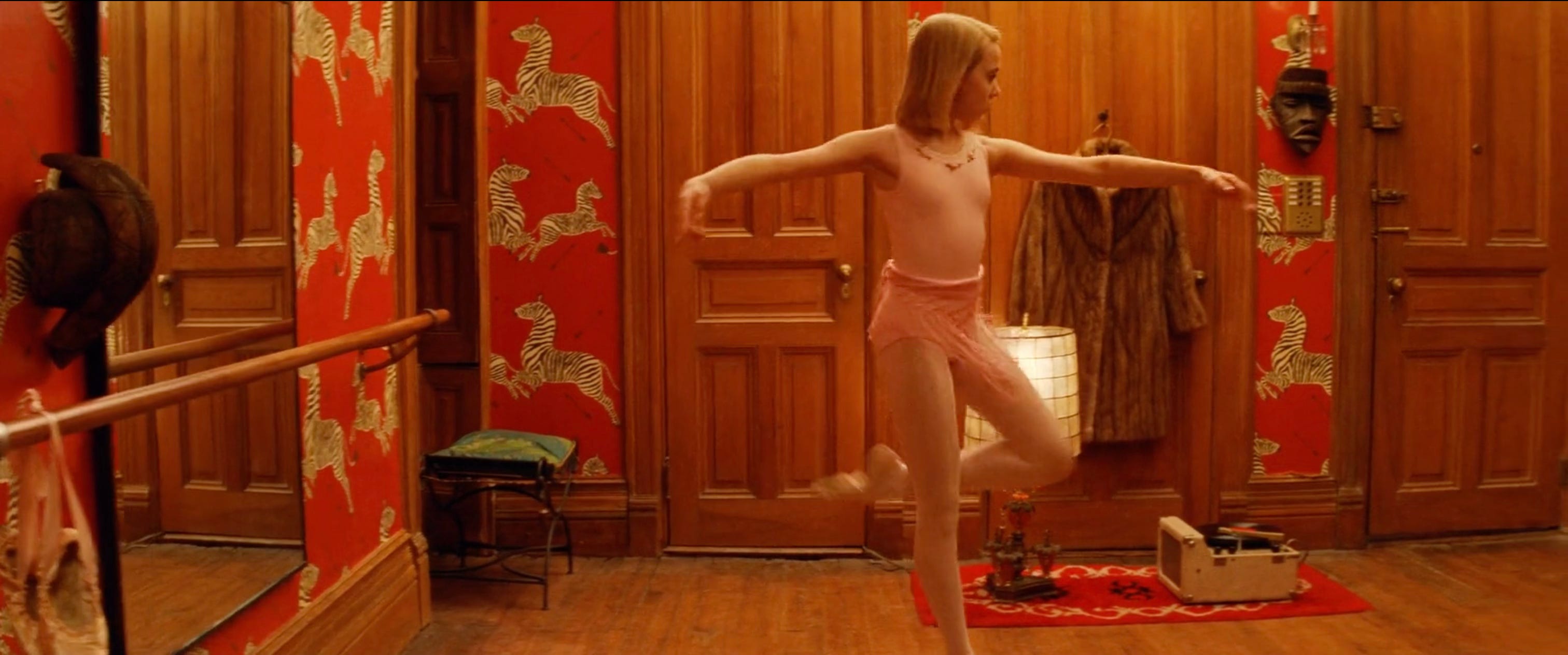
Anderson swiped this Scalamandré dazzle wallpaper from the New York spot Gino of Capri (affectionately known as “Gino’s” by New Yorkers) and then introduced it to his world. Scalamandré’s reputation with the old moneyed wasps is gold.

This is the first time I’ve ever seen or heard of Rimowa luggage. I’m instantly in love with the aluminum travel cases. I’ve been traveling with my own set ever since.
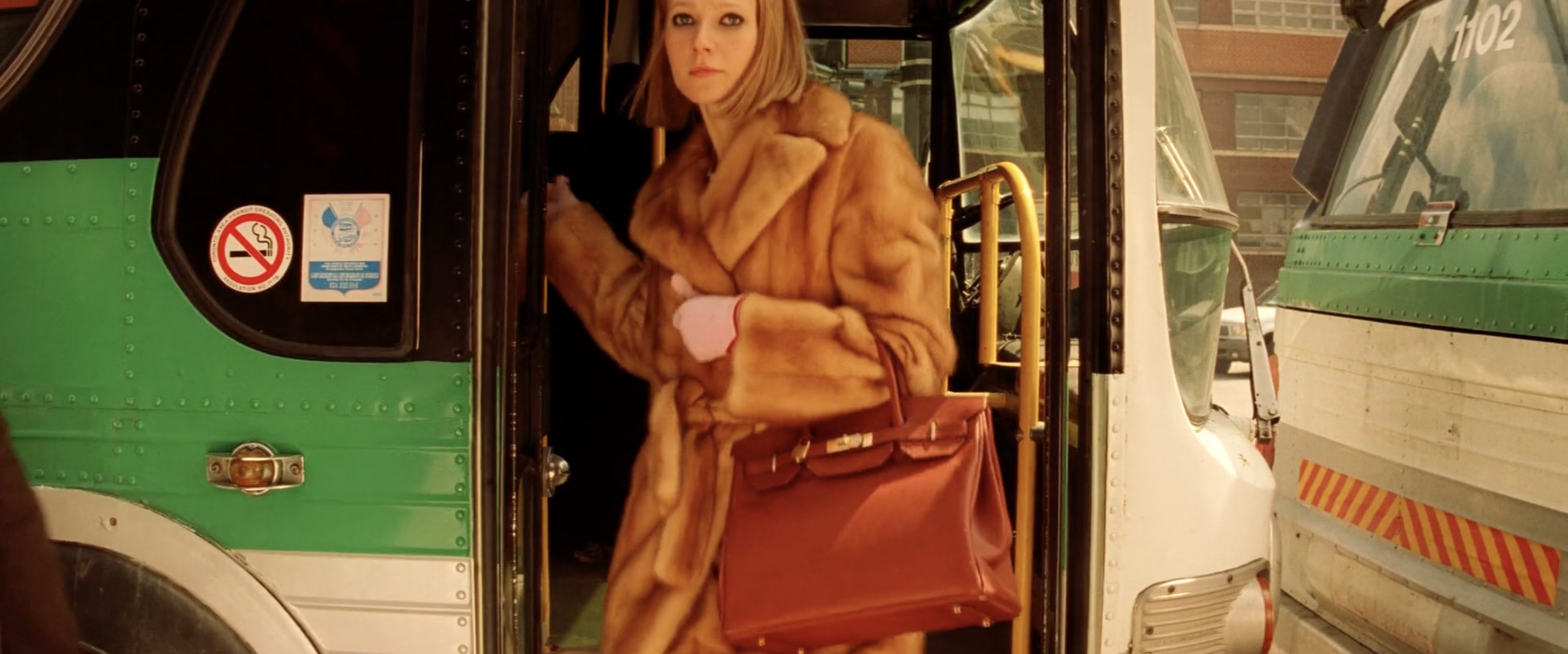
The prestigious Hermés Birkin bag (likely handed down by her mother Ethylene…or nicked from her closet). The Birkin is less a bag and more a passport into a rarefied universe where craftsmanship borders on alchemy. Unbranded yet unmistakable. It’s silhouette architectural but unfussy. Notoriously difficult to acquire. The nonchalance in which Margot lugs it in the crook of her arm alludes to the heights at which the Tenenbaums were once perched.
Legend has it, that in 1983, British-French singer and actor Jane Birkin found herself on an Air France flight beside Jean-Louis Dumas, then–chief executive of Hermès. The wicker bag she was carrying toppled, its contents cascading across the cabin in a landslide. Birkin lamented that she could never find a leather bag both elegant and practical enough for her life. Dumas, not one to let a good crisis go to waste, began outlining a solution right there on the plane—an impromptu blueprint that would quietly alter the luxury landscape.
The Birkin bag emerged a year later: structured yet accommodating, timeless yet born of a thoroughly human inconvenience[1]. Hermès crafted it with the same near-monastic devotion it gives all its leather goods, and over time the bag gathered its own mythology—waitlists, craftsmanship lore, and a cultural gravitas that feels almost gravitational.
The bag, if you can even secure a pre-owned one, will cost north of $25,000.

The Hermés Kelly bag. Fun fact: the Kelly bag is the most difficult bag to construct despite it being smaller than the Birkin bag—in fact, it’s because it is smaller that the degree of difficulty is greater. It is named after Grace Kelly, who carried it in Alfred Hitchcock’s film To Catch a Thief.

This is the first time I come across a United States Air Force N-3B Snorkel parka. I love how Anderson endorses costume designer Karen Patch’s utilization of it on a women. The beautiful ying and yang of the masculine and feminine. I have a vintage Air Force issued model in olive that boasts a real coyote fur hood…worn over a navy blazer, it’s brilliant.
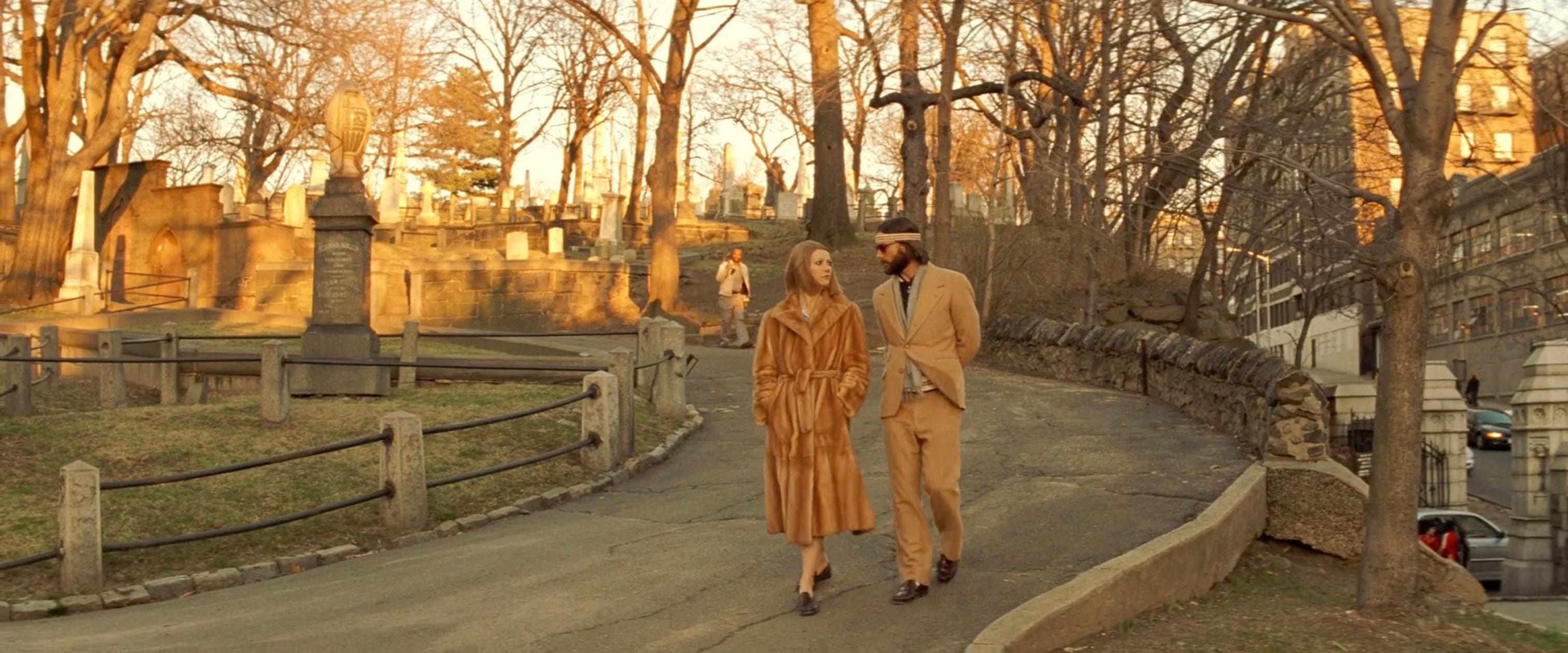
Anderson dressed up his sportswear and dressed down his formalwear in this iconic uniform for Richie Tenenbaum. The sport jersey or track jacket under a camel hair suit is a look I iterate on ad infinitum.
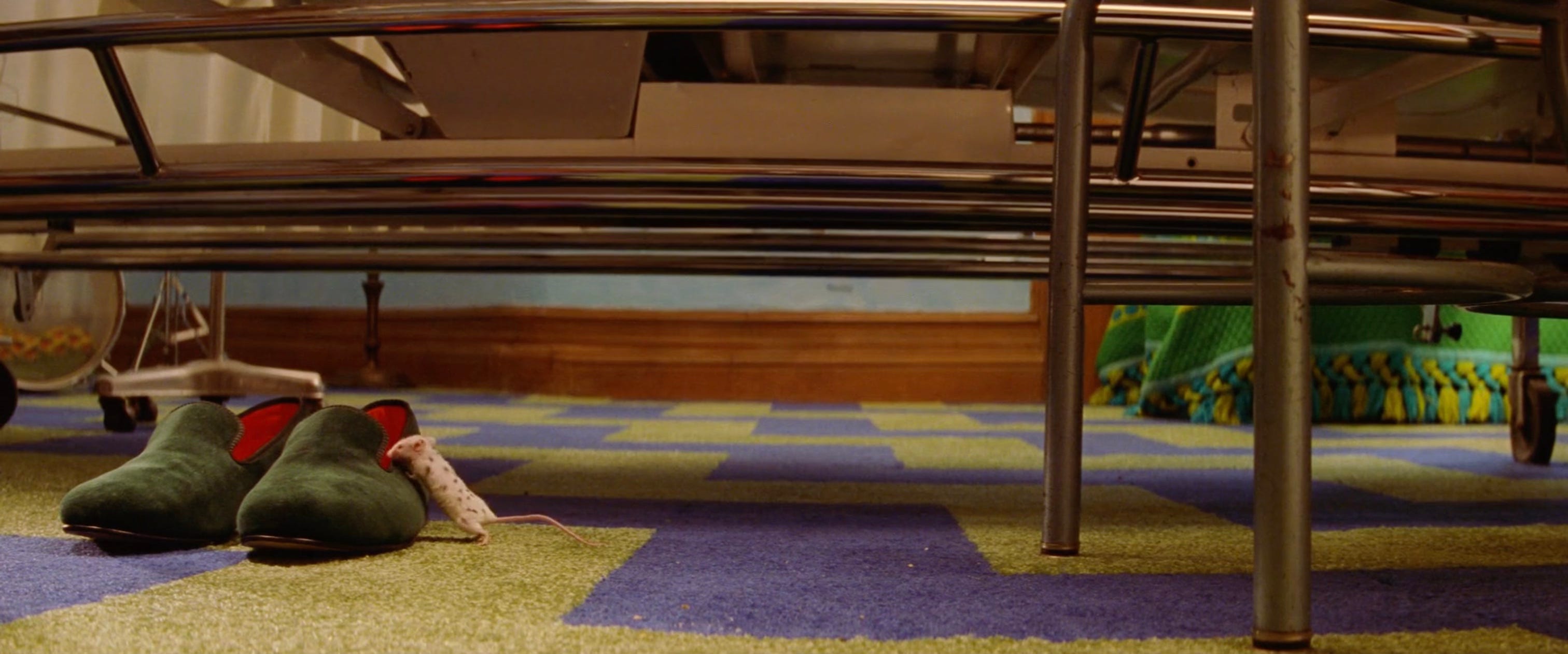
This is the first time I become aware of what velvet smoking slippers are. I take great joy in designing these for F.E. Castleberry.

The red hunting coat, colloquially knows as “hunting pink” is introduced to me for the first time in this montage of Royal with his grandsons Ari and Uzi. The hunting jacket is a house style in the F.E. Castleberry world, only with a Sid Vicious bent.
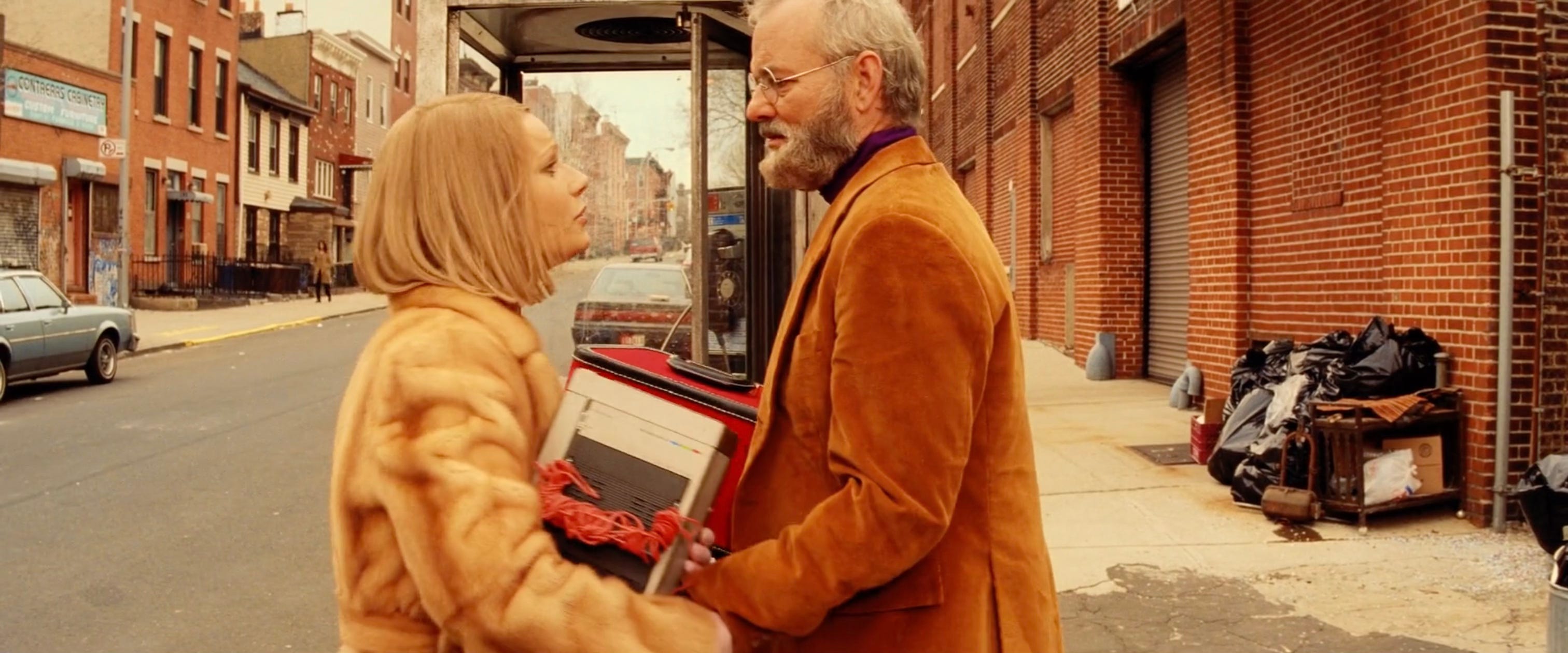
Anderson scores this deftly funny breakup scene with Vince Guaraldi’s “It’s Christmas Time.” This moment opens up jazz music for me…a rabbit hole I’ve still not crawled my way out of yet. More on this album in a bit.
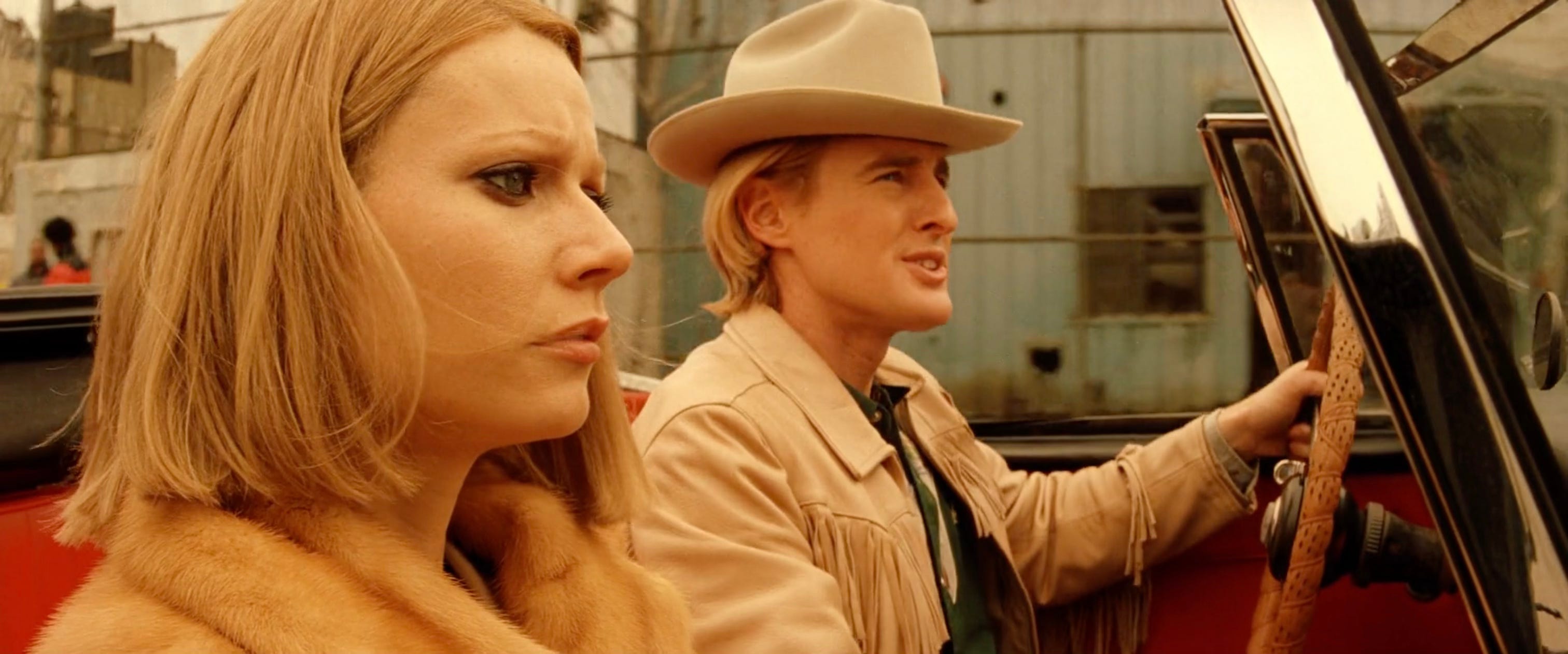
“Police and Thieves” is piped through the car stereo as Eli Cash drives to his drug dealer’s apartment. This is the first time I’ve ever paid attention to The Clash…the only band that matters.

Scoring Margot Tenenbaum’s sexually promiscuous montage is “Judy is a Punk.” I’m immediately reminded of how great The Ramones are.
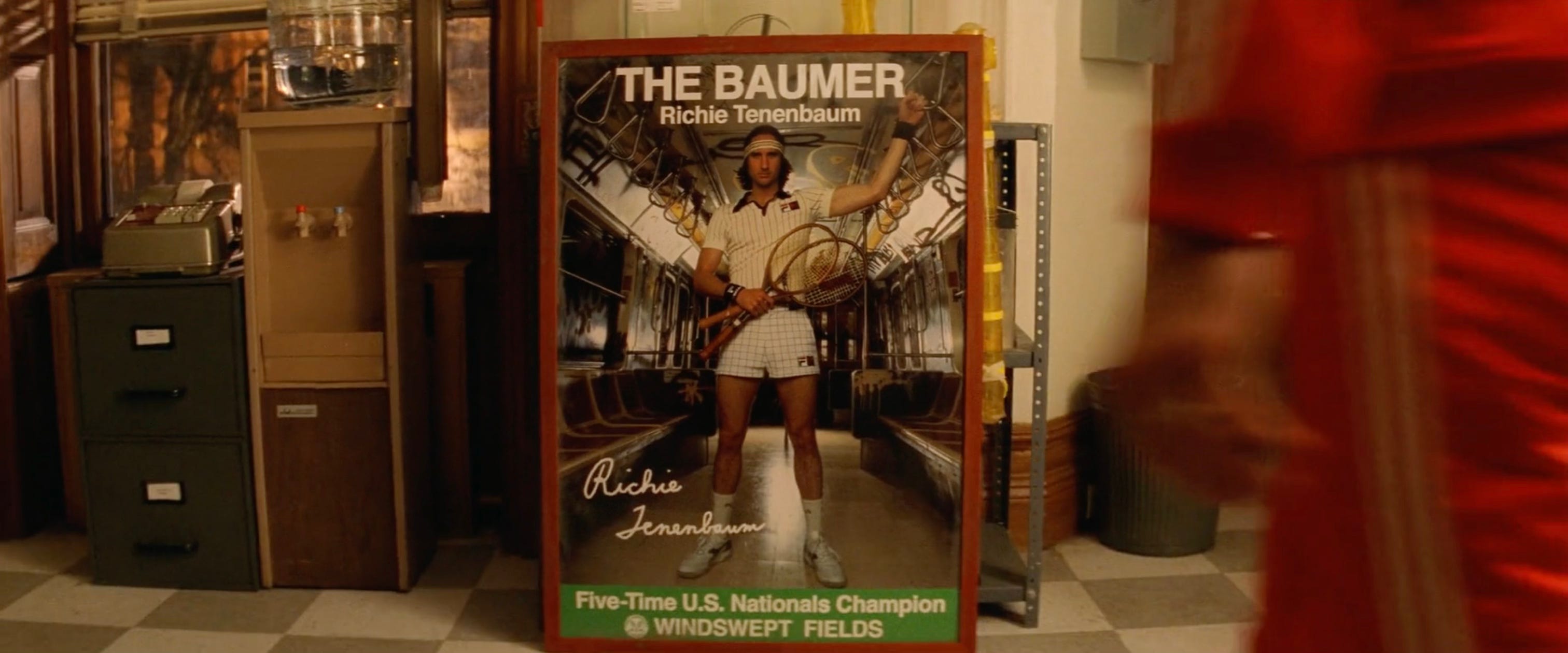
Bjorn Borg is largely brought to my attention because he serves as a muse for Anderson when developing the character of Richie Tenenbaum. Borg, to this day, possessed the best style in tennis. He is the only player I know to have arrived to matches in a fur coat. Did this influence Margot Tenenbaum’s costume? I wouldn’t rule out the possibility.
It is Anderson’s taste level that is subtly (and not so subtly) on display in his films; and none more so than The Royal Tenenbaums. A world-maker of the highest order. This film serves as a taste portal…granting me (and anyone else for that matter) entrée into his secret society, should they only be willing to visit the alter with a devotion typically reserved for saints.
CRATE DIGGING
THERE IS A DISTINCT PLEASURE in discovering old music…music that’s not only made its dent in the universe prior to your lifetime but that’s influenced many of the bands that you love while managing to sound modern in the present day and age.
Crate Digging is about discovering old music. The classics. The obscure. The looked over. The uncut gem. The minor masterworks. It’s a liberal arts audit of the music that scores the world of F.E. Castleberry. Alternative. Classical. Rock. Pop. Grunge. Blues. Punk. Post Punk. Jazz. Bossa Nova.
The Life Aquatic Studio Sessions is an album I revisit with a regularity second only to that of a devout Catholic and confession. This conceptual cinematic album is a charming tight rope act between pop and bossa nova. It is not the official film soundtrack—while that is a wonderful listen in its own right, but an expanded sonic companion by Seu Jorge of…wait for it…David Bowie covers.

So the story goes…[Wes] Anderson had seen City of God, and loved this character Knockout Ned. Anderson tells his producer, “I’d like to see if this actor might be interested in playing this part we have, Pelé dos Santos. He’s Brazilian, but he has to play music in it.” The actor is Seu Jorge. When Anderson sees Jorge auditioning, he realizes Jorge could not have possibly learned to play guitar this well prior to the audition. Of course, Jorge isn’t really an actor. He’s a musician. And not just any musician but a Portuguese pop star.
Once Anderson realizes what luck he’s fallen into, his vision for the Pelé dos Santos role opens up, significantly.
Once I saw here’s what he can do, and here’s what he sounds like, and here’s what his music is like…then I just said, Well, let’s do I think like, twelve of these or something. Let’s just have him be a sort of chorus all through the movie.
—Wes Anderson
What makes the album especially captivating is the way Jorge reframes Bowie’s work through a distinct cultural and emotional lens. Mind you, legend has it, Jorge had never heard any of Bowie’s music…he’s creating these acoustic Portuguese translated covers having only heard the original songs for the first time. What Anderson thought were translations, in fact, turned out to be an eventual realization that Jorge had made up his own lyrics. Upon this eventual realization, Anderson says, “Okay, well, at least get, you know, some of the key, you know, some of the, you know, ‘Rebel, Rebel.’ We need to have those words.”
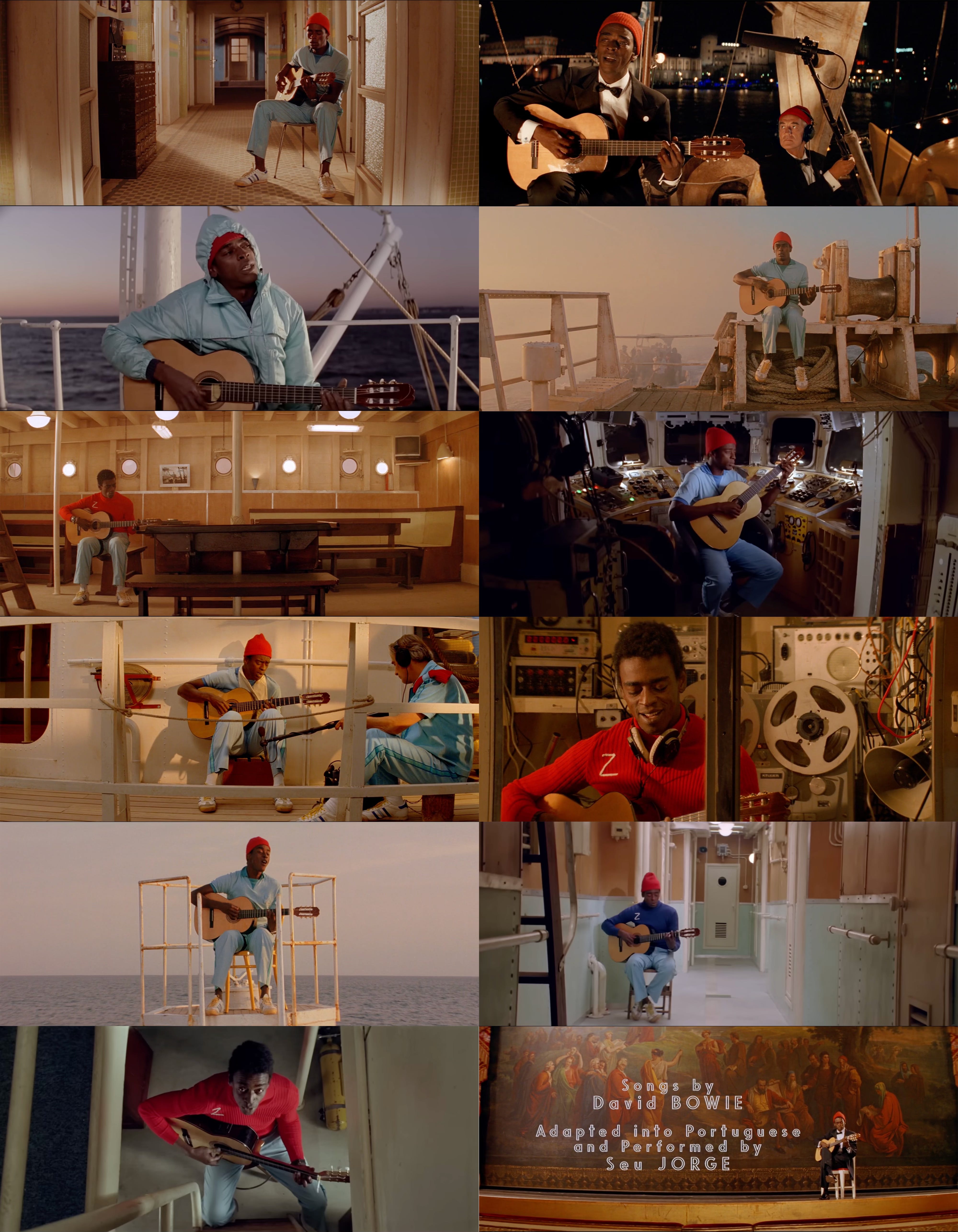
These covers are really Jorge’s interpretations—at once familiar and entirely new. The Portuguese lyrics lend the songs an intimate, almost handwritten quality, as if they’re being rediscovered rather than covered. “Rebel Rebel,” for instance, becomes soft and contemplative, while “Life on Mars?” takes on a bittersweet calm that contrasts with the sweeping drama of Bowie’s version. They’re much more Jorge than you might think right off the bat…a testament to how a great artist can illuminate the work of another without diminishing the original.
“Had Seu Jorge not recorded my songs in Portuguese, I would never have heard this new level of beauty.” —David Bowie
Watch Seu Jorge perform his Bowie covers live on the film set of The Life Aquatic with Steve Zissou.
CHRISTMAS TIME IS HERE. I would be remiss to not share what I consider to be the quintessential holiday album—Vince Guaraldi’s A Charlie Brown Christmas. It is one of the rare holiday albums that transcends its seasonal genre and becomes something closer to a cultural touchstone. Commissioned somewhat unexpectedly for an animated special about a quiet, introspective boy and his friends, Guaraldi delivered a jazz score that felt both sophisticated and deeply childlike. His trio’s feather-light touch—cool-jazz piano lines, brushed drums, and melodic, almost conversational bass—created a soundscape that matched Charles Schulz’s gentle melancholy. Arrangements like “Skating” and “Linus and Lucy” radiate an effortless charm, the sort that feels improvised yet perfectly inevitable, capturing both the innocence and the emotional complexity of childhood.

The album serves as a sort of epochal sonic milestone…before A Charlie Brown Christmas and after A Charlie Brown Christmas. Before Guaraldi, holiday music leaned heavily on orchestral bombast and crooner warmth; afterward, the idea that Christmas could swing with a wistful, understated cool became part of the canon. His arrangements of traditional tunes—“O Tannenbaum” and “What Child Is This” among them—are reverent but never stiff, suffused with jazz harmony that opens them up rather than weighing them down. Decades later, A Charlie Brown Christmas remains not just a soundtrack but a ritual: a cue for the season, a reminder of childhood gentleness, and a masterclass in how simplicity and restraint can achieve a kind of quiet perfection.
Anderson discovered it could also score a melancholic separation.
Footnotes
Jane b. par Agnès v. 1988
Loved all of this. The RT’s was also my first Wes Anderson film, seen in its opening weekend on my first trip to Manhattan, staying with a friend on the UWS. Smitten ever since. I don’t know the popular opinion, but French Dispatch also ranked high for me, seemed like a return to the literary visual storytelling of this film…. Thanks for the read, sir.
Thank you for the insights into your taste & brand. Really fun write up. Been rewatching all of Wes Anderson’s movies as we roll into Christmas.